If you’re planning to start a dishwashing liquid business, improve your
current detergent formula, or simply learn how professional dish soap is made, this guide walks you through a balanced 20-liter rich-foam dish soap formulation.
A successful dishwashing liquid isn’t just about creating bubbles—it should effectively cut grease, rinse easily, remain gentle on hands, and maintain stable viscosity over time. By understanding the role of each ingredient and following the correct mixing sequence, you can produce a high-quality product suitable for both household and commercial use.
Why Rich Foam Matters
Although foam itself doesn’t clean, consumers often associate rich, stable foam with effectiveness. A well-formulated dish soap should provide:
- Powerful grease-cutting performance
- Stable and long-lasting foam
- Easy rinsing without residue
- Mildness on hands
- Attractive appearance
- Good shelf stability
20-Liter Batch Formula
Step-by-Step Mixing Process
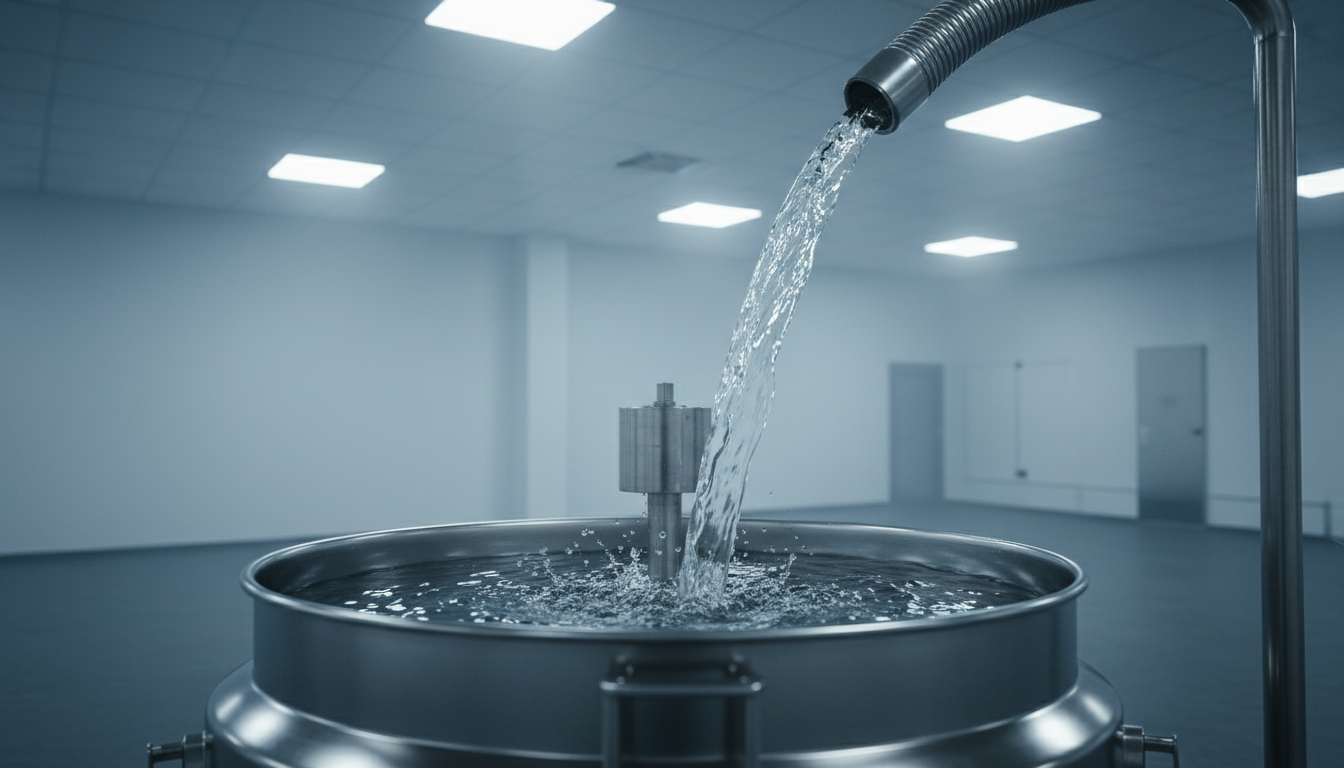
- Add 12 kg water into the mixing tank.
- Dissolve 100 g EDTA-2Na completely.
- Slowly add 1,440 g LABSA with stirring.
- Separately dissolve 190 g NaOH in water, cool, then slowly add to neutralize LABSA.
- Gently mix in 900 g SLES.
- Add 2,240 g AOS.
- Add 440 g CAPB.
- Mix in preservative, fragrance, and dye.
- Add remaining water to reach 20,000 g total.
- Gradually add 200–500 g salt until desired thickness.
- Adjust pH with 20–80 g citric acid if needed.
- Let the mixture rest 12–24 hours before bottling.
Essential Equipment
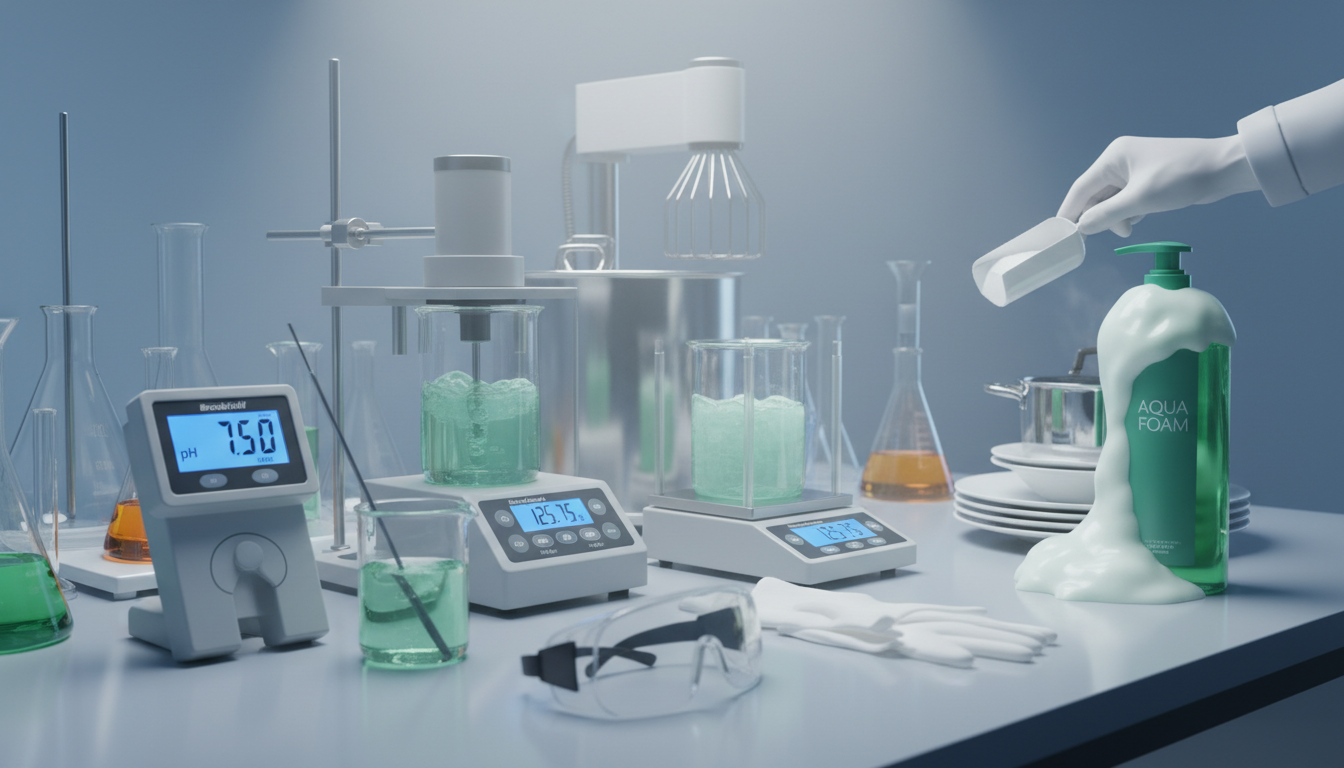
- Mixing tank
- Mechanical stirrer
- Digital weighing scale
- Weighs ingredients accurately.
- Recommended Accuracy
- 0.01 g for additives
- 1 g for bulk chemicals
- pH meter
- Measures the final pH of the dish soap.
Helps ensure a skin-friendly pH (typically 7.0–8.0).
Safety Guidelines
- Wear gloves and eye protection.
- Always add caustic soda to water, never the reverse.
- Work in a well-ventilated area.
- Label chemicals clearly.
- Store finished product away from sunlight.
Why This Formula Works Well
The combination of LABSA, SLES, AOS, and CAPB provides:
- Strong grease removal
- Rich, stable foam
- Effective cleaning performance
- Good rinsability
- Pleasant washing experience
These surfactants are widely used in household cleaning products because they balance cleaning efficiency with foam quality.
Conclusion
A high-quality dishwashing liquid combines effective surfactants, proper pH adjustment, controlled viscosity, and careful manufacturing techniques. By following this 20-liter formulation and mixing process, you can consistently produce a rich-foaming dish soap suitable for home use or small-scale commercial production.